Breaking Down Silos
How Collaborative Journey Mapping Transformed Team Alignment and Patient Experience
April 2025 - September 2025 | UC San Diego Health
The Challenge
Healthcare organizations face unique complexities when coordinating patient experience efforts across large, specialized teams. At UC San Diego Health, our 40-person Marketing and Communications team brought diverse expertise and perspectives—each focused on different aspects of the patient journey. However, we lacked a unified framework for understanding how these pieces fit together from the patient's point of view.
An opportunity emerged when analyzing our specialty care provider pages. The data revealed areas for improvement:
75-80% bounce rate on specialty care provider pages
Mobile bounce rates even higher (up to 85% vs. 76% desktop)
37-47% of traffic from mobile devices—suggesting a need for mobile-specific optimization
These metrics indicated that patients might be struggling to find the information they needed to make confident decisions about their care, even when finding highly qualified specialists.
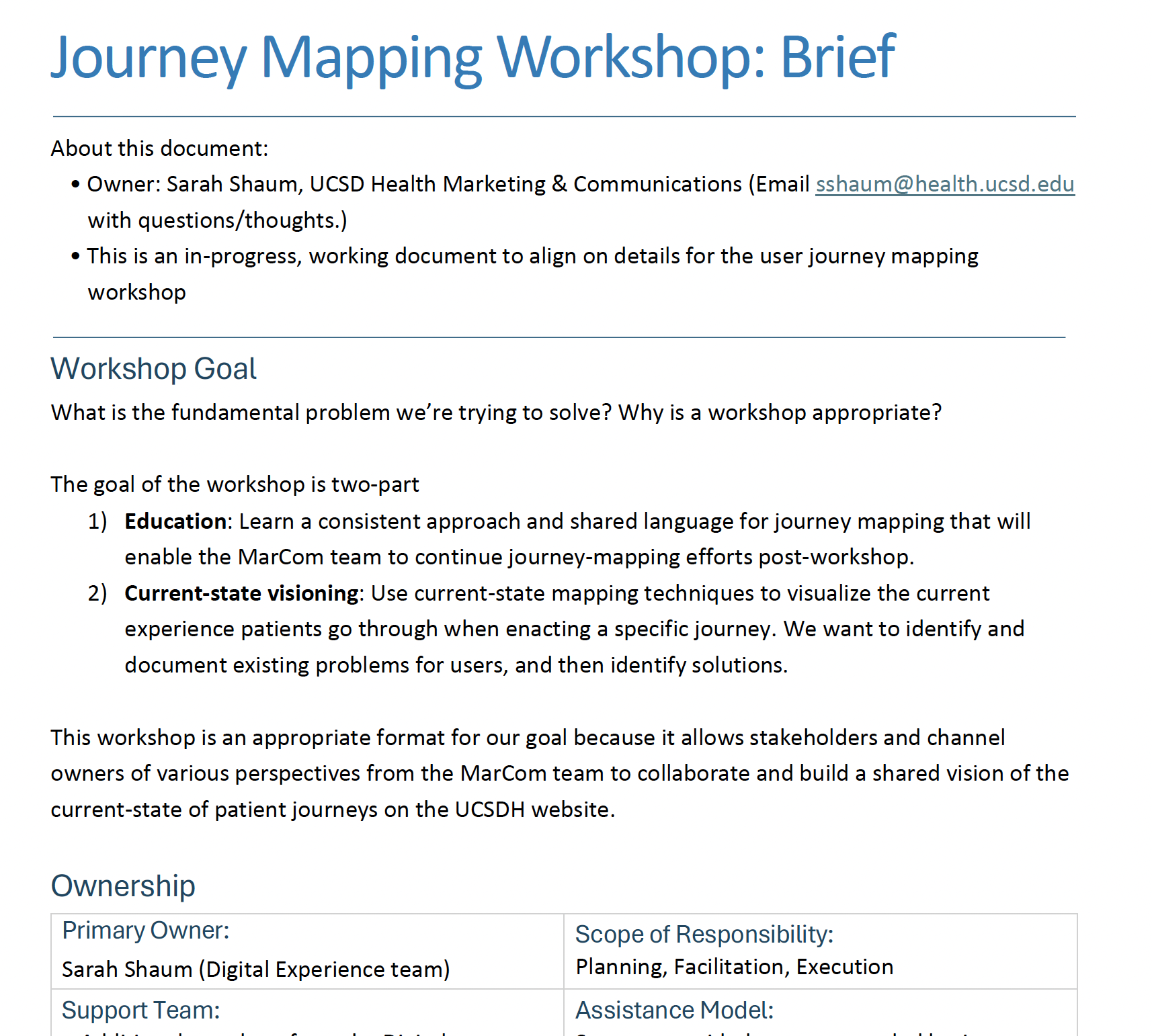
Business Objectives
Establish shared methodology for journey mapping across Marketing and Communications
Visualize current-state patient experience to identify gaps and opportunities
Strengthen cross-functional collaboration and create evidence-based decision-making frameworks
Develop actionable improvements for specialty care provider selection
My Role
I designed and led the entire initiative:
Conducted 35 internal stakeholder interviews across 5 weeks
Recruited and interviewed 5 external patients (ages 25-61, diverse backgrounds)
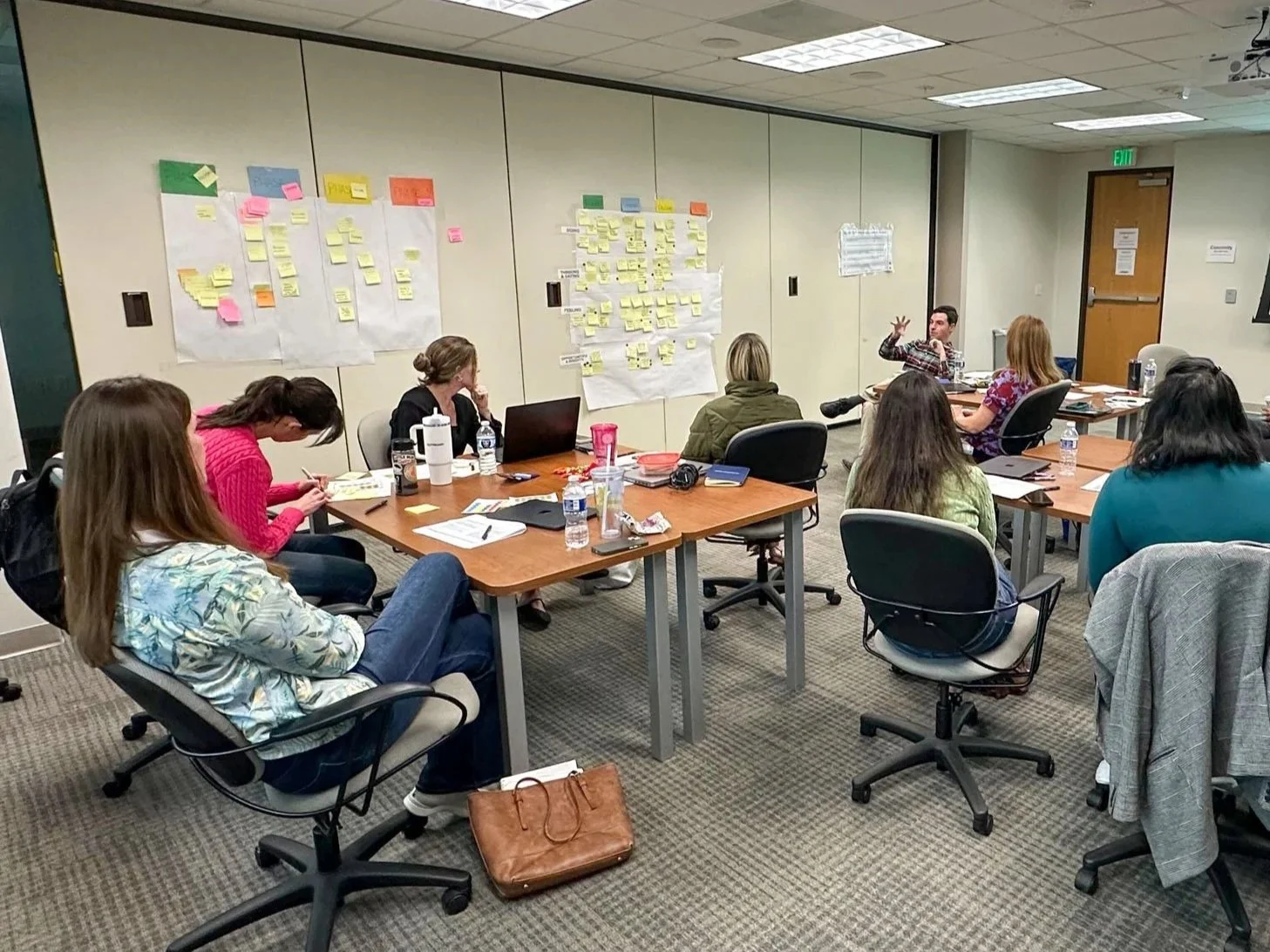
Facilitated two multi-day workshops teaching current-state journey mapping methodology
Created research-based persona: "Specialty Care Sally"
Synthesized findings and presented actionable recommendations
I collaborated with the Digital Experience Associate Director and drew on marketing team expertise throughout.

Meet "Specialty Care Sally"
Scenario: Sally, 58, a retired teacher with higher education, searches provider profiles to find critical information about each specialty care provider's specific experience with her rare condition, patient outcomes, and specialized techniques. She needs confidence in her choice but struggles to compare providers—especially on her phone.
This persona grounded our abstract methodology in concrete user needs and became the lens through which we evaluated every touchpoint.
-
Internal Research:
35 one-on-one interviews with Marketing and Communications team members
Gathered diverse perspectives on patient challenges and opportunities for collaboration
Identified questions that needed deeper patient research
External Research:
5 in-depth interviews with patients who recently selected specialty care providers
User feedback surveys, NRC research data, patient feedback forms
Competitive analysis of healthcare provider sites
Workshop Methodology:
Current-state customer journey mapping
Emphasis on emotional journey, tasks, and behaviors
Collaborative mapping with cross-functional stakeholders
-
Patient Needs:
Availability drives decisions: Patients often prioritize being seen quickly when selecting specialists
Trust requires validation: Review credibility and provider credentials significantly influence confidence
Mobile experience needs enhancement: Comparing providers on mobile devices presents challenges
Authenticity matters: Patients seek specific details about provider expertise and experience
Transparency builds confidence: Real-time scheduling visibility directly impacts satisfaction
Collaboration Opportunities:
Teams brought valuable but differing perspectives on patient needs
Opportunity to create shared understanding through structured journey mapping
Need for regular forums to align on patient experience priorities
-
Enhanced Collaboration:
Brought 35 stakeholders together: Created forum for cross-functional problem-solving and knowledge sharing
Established shared methodology: Team understands journey mapping approach
Strengthened partnerships: Digital Experience, Web Development, and Content teams now collaborate regularly on patient experience initiatives
Evidence-based approach: Created framework for grounding decisions in patient research
Improved communication: Regular information sharing now keeps teams connected and informed on patient experience work
Team expansion: Success of collaborative approach contributed to Digital Experience team growth and enhanced project management capabilities
Research Deliverables:
A comprehensive current-state journey maps
Research-based persona ("Specialty Care Sally")
Prioritized list of 5 improvement opportunities
Journey mapping process documentation for future use
Clear action items with assigned owners
Patient Experience Improvements: Multiple projects now underway to address identified opportunities—including provider profile enhancements, mobile optimization, and content strategy refinements based on workshop insights.
From Insights to Action: Provider Review Credibility
The Problem Identified
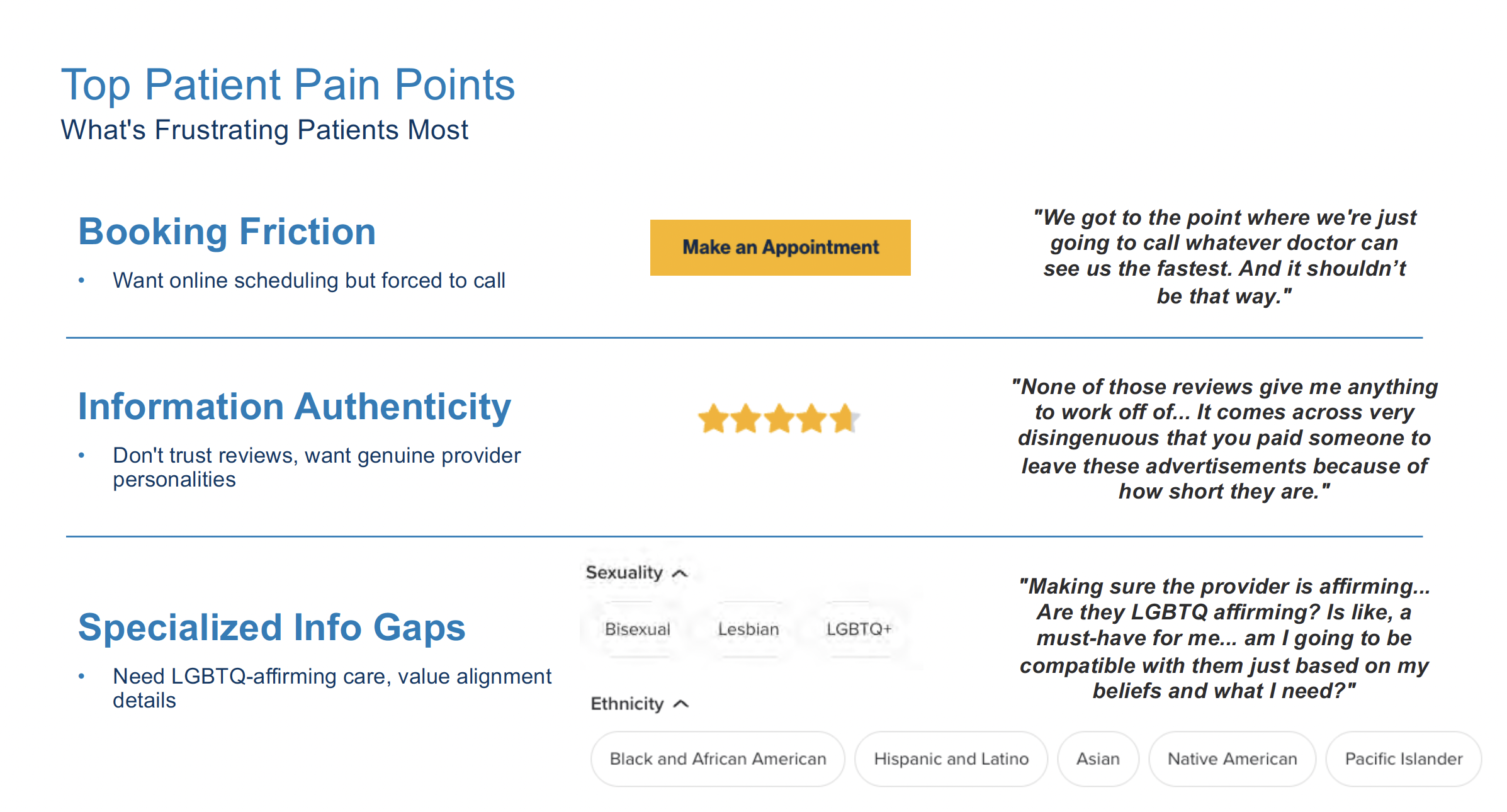
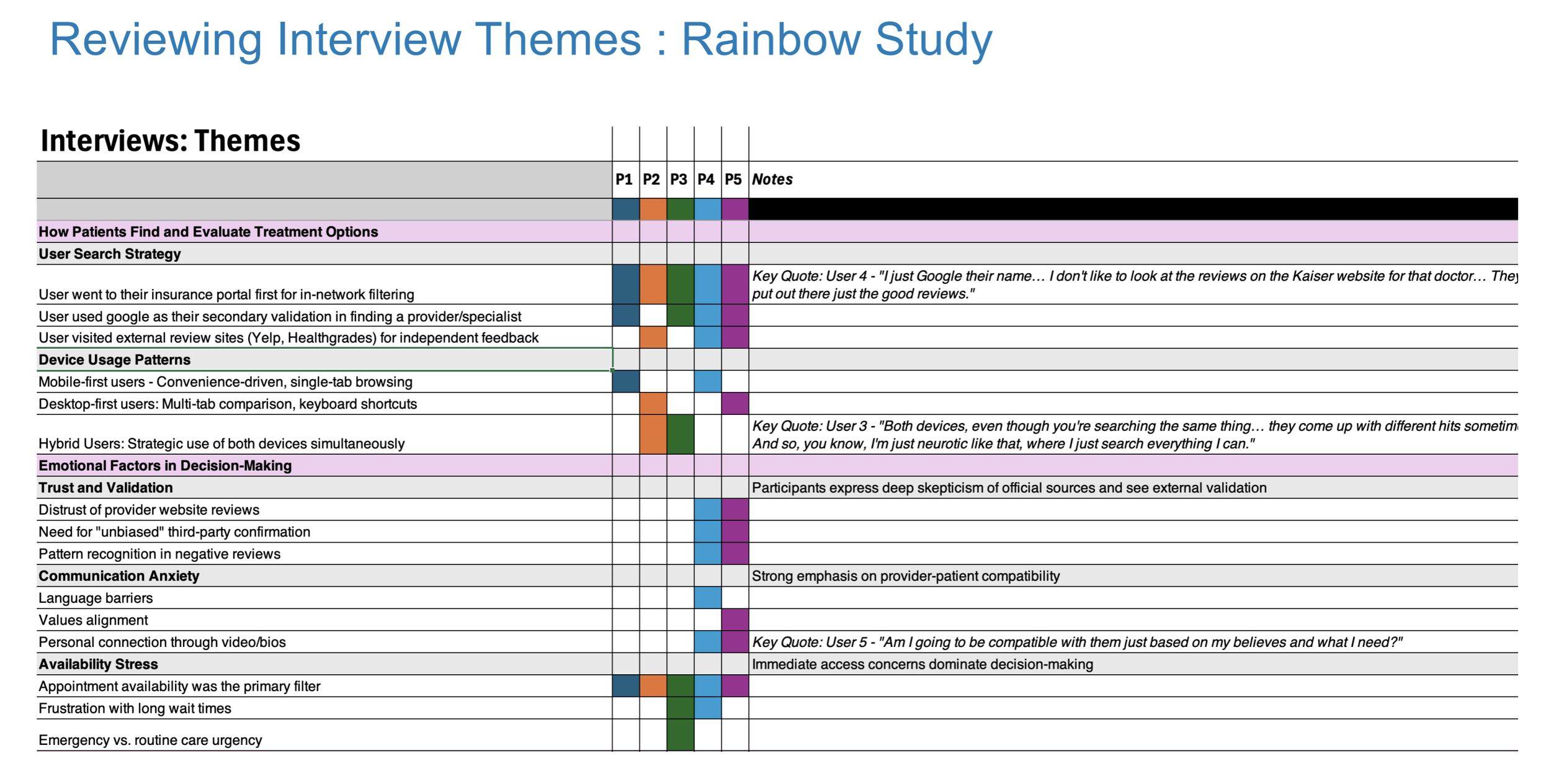
During journey mapping workshops and patient interviews, a consistent theme emerged: participants questioned the authenticity of provider reviews. Multiple patients expressed skepticism, with some suspecting reviews were "fake or paid." One participant stated they actively sought external review sources (Healthgrades, ZocDoc) because they didn't trust reviews on healthcare organization websites.
"None of those reviews give me anything to work off of... It comes across very disingenuous that you paid someone to leave these advertisements because of how short they are."
—John, User Interview
This insight revealed a critical trust barrier in the specialty care selection process—even when providers had legitimate positive feedback, the presentation undermined credibility rather than building confidence.
Proposed Solutions
Collaborating with stakeholders from the Digital Experience and Web Development teams, I developed evidence-based recommendations:
-
Display review source explicitly (e.g., "Reviews collected via NRC Health patient surveys")
Clarify review collection and moderation process
Avoid misleading "verified" language that raised suspicion rather than building trust
-
Integrate external review widgets from established platforms (Healthgrades, ZocDoc)
Allow users to access third-party validation without leaving the site
Demonstrate confidence in provider quality through willingness to show external perspectives
-
Test Q&A sections where patients could ask providers specific questions
Pilot specialty-specific content that addresses common patient concerns
Create opportunities for authentic provider-patient connection beyond traditional reviews
-
Recommendations presented to stakeholders with prioritization based on implementation feasibility and expected trust impact. This work exemplifies how journey mapping insights translate into specific, actionable improvements grounded in user research.
What I Learned
-
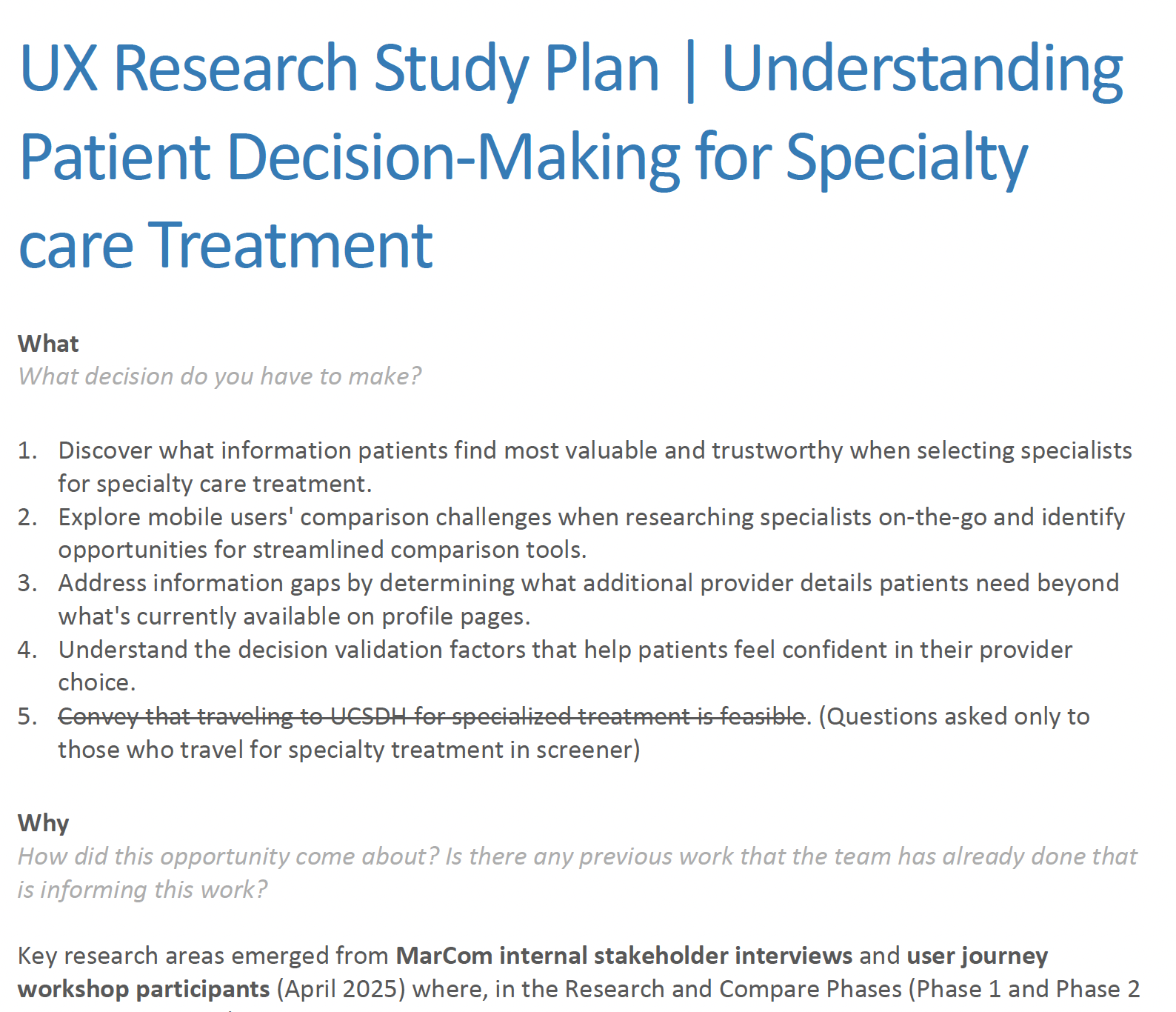
I originally planned to study patients with rare conditions traveling long distances for treatment. However, given the importance of maintaining positive relationships with specialty care programs, I adapted to study local specialty care selection more broadly. This shift actually strengthened the project's impact—the findings applied to a much larger patient population and could benefit more people seeking care.
-
As a team member still building relationships within the organization (3 years at the time), I developed strategies for conducting independent patient recruitment that didn't rely on existing clinical partnerships. This approach has strengthened our team's capabilities and demonstrated our ability to conduct research that complements rather than disrupts clinical operations.
-
Engaging 11 stakeholders in the workshops required careful facilitation. Some team members were initially uncertain about the workshop format, while others were eager to participate. By creating space for all voices and clearly demonstrating value, I was able to engage the full spectrum of perspectives—resulting in productive discussions and shared ownership of outcomes.
-
Interviewing 35 marketing team members was ambitious, but it ensured every perspective was heard and every team member felt invested in our direction. This thorough approach to stakeholder engagement created a strong foundation for ongoing collaboration.
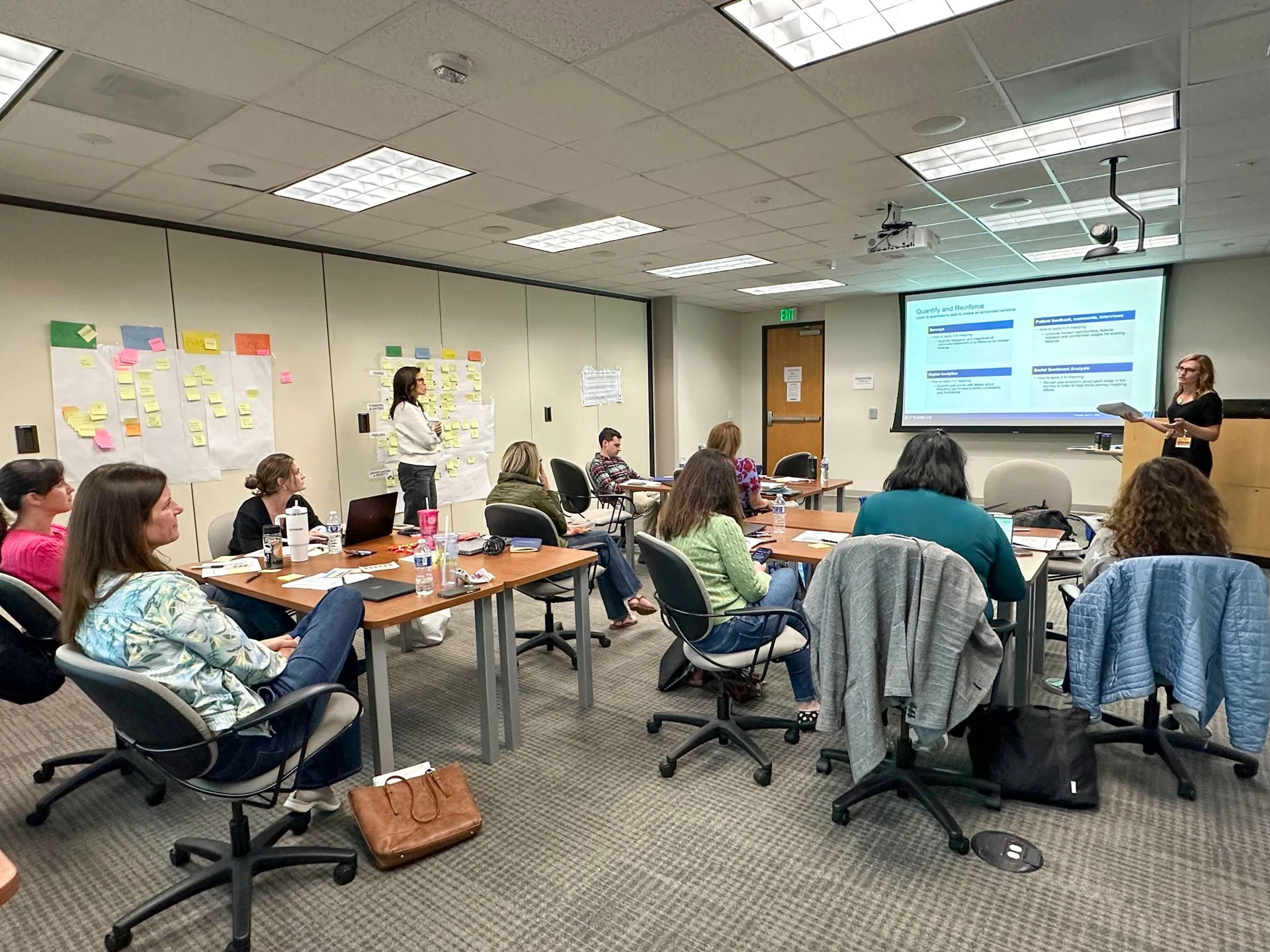
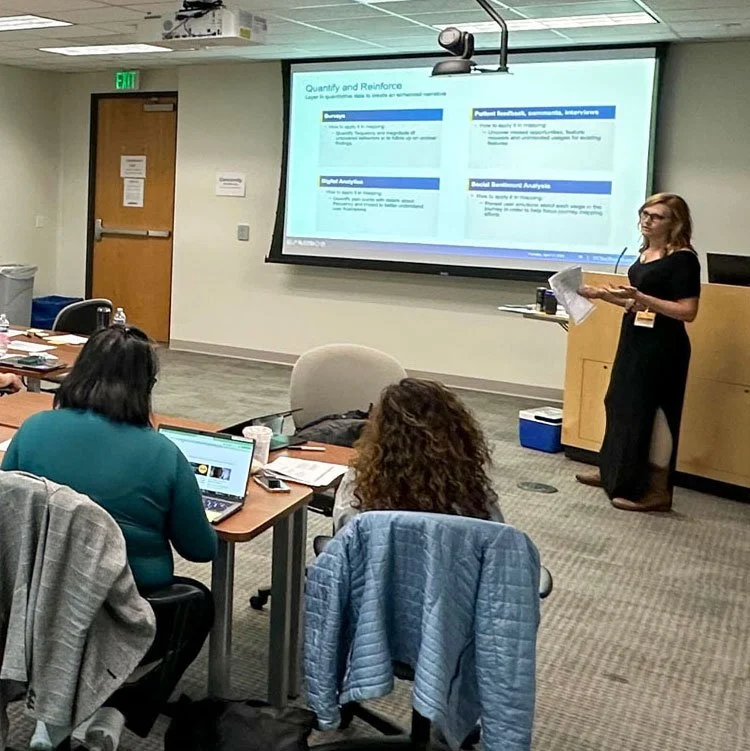
Images of post it notes on a wall with teams assumptions of the user experience, a photo of the workshop participants, and last a digital layout of the assumption notes next to validation notes from user interviews.
Why This Project Matters
Healthcare organizations have unique complexities that require thoughtful approaches to user research and collaboration. This project demonstrated that with the right methodology and inclusive process, teams can align around patient needs and create meaningful improvements to the care experience.
By establishing journey mapping as a repeatable practice and creating frameworks for evidence-based decision-making, this initiative laid groundwork for ongoing patient experience work across the organization.
Methods Used: In-depth interviews (internal & external) • Current-state journey mapping • Persona creation • Survey analysis • Secondary research • Competitive analysis • Workshop facilitation
Skills Applied: Qualitative research • Stakeholder management • Workshop facilitation • Change management • Data synthesis • Cross-functional collaboration • Healthcare UX